
The Complete Guide to Childhood Vaccinations in Singapore (2026)
Every parent in Singapore faces the same moment: you are handed a Child Health Booklet at the hospital and suddenly there is a schedule to follow, dates to remember, and decisions to make. Some of those decisions start within 24 hours of birth.
This guide covers everything you need to know about the National Childhood Immunisation Schedule (NCIS), what is subsidised and what is not, how Baby Bonus and CHAS work at GP clinics, and how childhood developmental screening fits alongside your baby’s vaccination appointments.
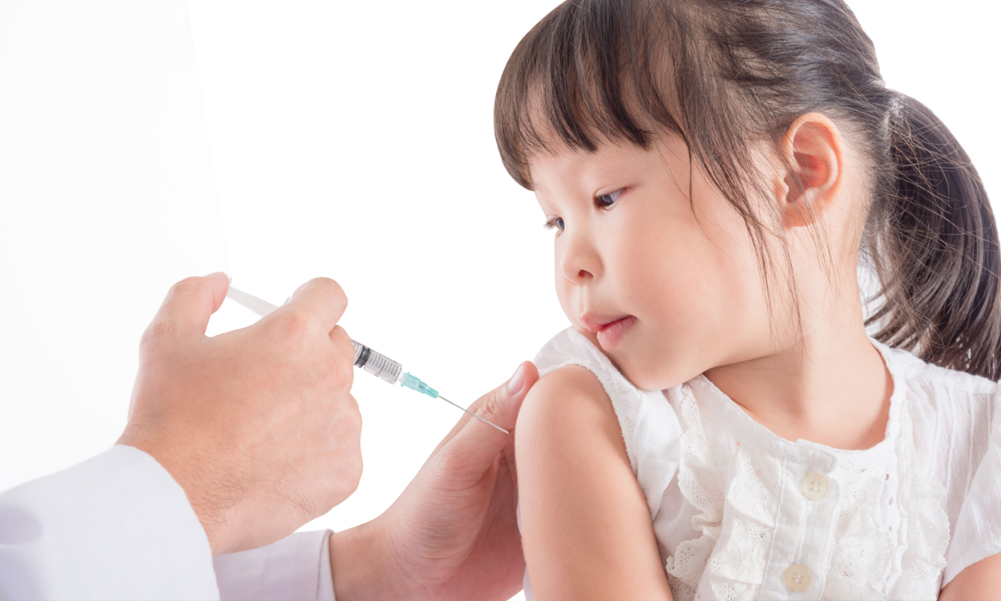
Understanding Singapore’s National Childhood Immunisation Schedule (NCIS)
What Is NCIS and Why It Matters
The National Childhood Immunisation Schedule (NCIS) is the set of vaccinations recommended as the standard of care for children in Singapore. It is developed and regularly reviewed by the Ministry of Health (MOH) in consultation with the Expert Committee on Immunisation (ECI).
The schedule is not static. MOH revises it periodically based on local disease burden, vaccine safety data, efficacy evidence, and cost-effectiveness assessments. The vaccines your older child received may differ from what is currently recommended for a newborn today.
The NCIS currently covers vaccinations against 14 diseases:
Hepatitis B
Diphtheria
Tetanus
Pertussis (whooping cough)
Poliovirus
Haemophilus influenzae type b (Hib)
Measles
Mumps
Rubella
Varicella (chickenpox)
Pneumococcal disease
Human papillomavirus (HPV)
InfluenzaCompulsory
Two vaccines are compulsory under Singapore’s Infectious Diseases Act: Measles and Diphtheria. All others are strongly recommended but not legally mandated.
Who Qualifies for Subsidised NCIS Vaccinations
Singapore Citizen (SC) children who meet the criteria for vaccination under the NCIS are eligible for full subsidies at CHAS GP clinics. The co-payment is $0 for all nationally recommended vaccinations on the Subsidised Vaccine List.
The subsidy structure was last updated on 1 September 2025. As MOH periodically revises these rates, confirm current co-payment fees with your GP clinic before each visit.
NCIS vs. Optional (Private) Vaccinations
Beyond the NCIS, there is a separate category of optional vaccinations not included in the national schedule but still available and recommended by doctors for additional protection. These include rotavirus and hepatitis A.
Optional vaccines are not subsidised under the NCIS and are paid out of pocket, though some can be funded through Baby Bonus or CHAS depending on eligibility. Many parents assume all childhood vaccines are free — that is only true for vaccines on the NCIS Subsidised Vaccine List for SC children at CHAS GP clinics.
NCIS Vaccination · Boon Keng & Yishun
Fully Subsidised NCIS Vaccinations at Lion Health Clinic
Lion Health Clinic is a registered NCIS provider. All vaccinations under the NCIS schedule are fully subsidised ($0 co-payment) for eligible Singapore Citizen children at our two clinic locations in Boon Keng and Yishun.
Complete NCIS Vaccination Schedule by Age
The table below sets out the full NCIS schedule from birth through secondary school, including the combination vaccines used at each age milestone.
| Vaccine | Birth | 2 Months |
4 Months |
6 Months |
12 Months |
15 Months |
18 Months |
2–4 Years |
5–9 Years |
10–11 Years |
12–13 Years |
13–14 Years |
15–17 Years |
|---|---|---|---|---|---|---|---|---|---|---|---|---|---|
| Bacillus Calmette-Guérin (BCG) | D1 | ||||||||||||
| Hepatitis B (HepB) | D1 | D2 | D3 | ||||||||||
| Diphtheria, tetanus and acellular pertussis (paediatric) (DTaP) | D1 | D2 | D3 | B1 | |||||||||
| Tetanus, reduced diphtheria and acellular pertussis (Tdap) | B2 | ||||||||||||
| Inactivated poliovirus (IPV) | D1 | D2 | D3 | B1 | B2 | ||||||||
| Haemophilus influenzae type b (Hib) | D1 | D2 | D3 | B1 | |||||||||
| Pneumococcal conjugate (PCV) | D1 | D2 | B1 | ||||||||||
| Measles, mumps and rubella (MMR) | D1 | D2 | |||||||||||
| Varicella (VAR) | D1 | D2 | |||||||||||
| Human papillomavirus (HPV2) | D1
(Females)
|
D2
(Females)
|
|||||||||||
| Influenza (INF) | Annual vaccination or pre-season for all children age 6 months to <5 years (6–59 months). | ||||||||||||
All NCIS vaccines are fully subsidised ($0 co-payment) for eligible Singapore Citizen children at CHAS GP clinics including Lion Health Clinic. Check your eligibility at HealthHub or confirm current rates with your clinic as MOH periodically revises the schedule.
Optional Vaccinations Worth Considering
Rotavirus Vaccine
Rotavirus is the leading cause of severe diarrhoea and dehydration in infants and young children. The rotavirus vaccine is an optional vaccination not included in the NCIS. It is administered orally (not by injection) in two doses: at 2 months and 4 months. Speak with your GP at Lion Health about scheduling this alongside your child’s other 2-month and 4-month appointments.
Influenza Vaccine for Children
Annual influenza vaccination is included in the NCIS for eligible children aged 6 months to under 5 years. Children receiving the influenza vaccination for the first time require two doses. In subsequent years, one annual dose is sufficient. Speak with your GP about timing and scheduling.
Hepatitis A
Hepatitis A vaccination is not on the NCIS but is available as an optional vaccine. It involves two doses given 6 months apart, starting from 12 months of age. It is particularly relevant for families who travel frequently to countries where hepatitis A is more common.
NCIS vs. Optional Vaccines: Cost at a Glance
The table below summarises co-payment costs for all vaccines for eligible Singapore Citizen children at CHAS GP clinics.
| Vaccine | Type | Schedule | SC Co-payment (CHAS GP) |
|---|---|---|---|
| BCG (Tuberculosis) | NCIS | Birth (single dose) | $0 |
| Hepatitis B (paediatric) | NCIS | Birth, 2 months, 6 months | $0 |
| DTaP / IPV / Hib (6-in-1) | NCIS | 2, 4, 6 months; booster at 18 months | $0 |
| PCV (Pneumococcal) | NCIS | 4, 6 months; booster at 12 months | $0 |
| MMR / MMRV | NCIS | 12 months (MMR), 15 months (MMR/MMRV) | $0 |
| Varicella (Chickenpox) | NCIS | 12 months, 15 months | $0 |
| Influenza (annual) | NCIS | Annually, 6 months to under 5 years | $0 |
| Tdap + IPV Booster | NCIS | Primary 5 (school-based) | $0 |
| HPV (females) | NCIS | Secondary 1 and 2 (school-based) | $0 |
| Rotavirus | Optional | 2 months and 4 months (oral) | Out of pocket |
| Hepatitis A | Optional | From 12 months; 2 doses 6 months apart | Out of pocket |
Optional vaccines (rotavirus, hepatitis A) can be paid using Baby Bonus Child Development Account (CDA) funds at Baby Bonus Approved Institutions. Speak with your GP for current pricing before scheduling.
Baby Bonus and CHAS for Vaccinations
How to Use Baby Bonus for Optional Vaccines
The Baby Bonus scheme, administered by the Ministry of Social and Family Development (MSF), provides eligible Singaporean families with a Child Development Account (CDA). The CDA can be used at Baby Bonus Approved Institutions for qualifying medical expenses, including optional vaccinations. Bring your child’s NRIC or birth certificate and your CDA-linked card to the clinic; the deduction is processed directly.
CHAS Subsidies Explained
The Community Health Assist Scheme (CHAS) allows eligible SC households to receive subsidised medical care at enrolled GP clinics. For NCIS vaccinations specifically, eligible SC children receive full subsidies regardless of CHAS card tier, whether Blue or Orange. If your family does not yet have a CHAS card, apply through the CHAS website or at any CHAS-enrolled clinic.
Medisave Usage for Childhood Vaccinations
For NCIS vaccines at CHAS GP clinics, SC children typically receive full subsidies, so Medisave is generally not required. For optional vaccines, Medisave eligibility depends on the specific vaccine and applicable MOH schemes. Confirm with the clinic which vaccines are Medisave-claimable at the time of your appointment, as these schemes are subject to periodic updates.
Developmental Screening Alongside Vaccinations
What Is Childhood Developmental Screening?
Developmental screening is a systematic assessment of a child’s development across physical, motor, language, cognitive, and social-emotional domains. It is separate from vaccination. Screening checks whether a child is developing according to expected milestones for their age and identifies any areas where early support may be beneficial.
Singapore’s national programme comprises seven screenings from birth to age 6, conducted at GP clinics and polyclinics. SC children are eligible for full subsidies ($0 co-payment) for all seven screenings at CHAS GP clinics. At Lion Health, the GP completes the developmental checklist alongside scheduled vaccinations where applicable, reducing the number of separate clinic visits.
| # | Age Window | What’s Assessed |
|---|---|---|
| 1st | 4–8 weeks | Physical examination (hips, heart, eyes), growth monitoring (weight, length, head circumference), feeding history, and hearing screen if not completed at birth. |
| 2nd | 3–5 months | Continued growth and feeding monitoring. Focus on motor responses, visual tracking, and responsiveness to the caregiver’s voice. |
| 3rd | 6–12 months | Growth and feeding, hearing check, squint test. Developmental checklist covers motor milestones such as rolling over, sitting up, and turning toward sounds. |
| 4th | 15–18 months | Physical growth and feeding, with emphasis on walking, emerging language, and social bonding milestones. |
| 5th | 2 years (24 months) | Gross and fine motor skills (e.g. kicking a ball) and language progression. Checks for the ability to use two-word phrases. |
| 6th | 3 years (36 months) | Personal-social development: imaginative play and self-care skills such as using a spoon and removing simple items of clothing. |
| 7th | 4–6 years | Final scheduled screening before primary school entry. Covers advanced language, social-emotional maturity, and cognitive milestones to assess school readiness. |
Red Flags: When to Consult Your GP Without Waiting for the Next Screening
Scheduled screenings are not the only trigger for a developmental review. Seek your GP or polyclinic doctor promptly if you notice any of the following signs before the next appointment is due.
| Age | Red Flag Signs |
|---|---|
| By 2 months | No eye contact. Does not respond to loud sounds. |
| By 6 months | Not smiling socially. Not turning head toward sounds or voices. |
| By 12 months | No babbling (e.g. ‘ba-ba-ba’). Not pointing or waving. Not reaching for objects. |
| By 18 months | No single words. Not yet walking independently. |
| By 24 months | No spontaneous two-word phrases (only echoing or repeating what they hear). No interest in simple pretend play. |
| At any age | Regression: any loss of previously acquired language, motor, or social skills. Social withdrawal: consistently avoiding eye contact, not responding to affection, or a strong preference for playing alone. |
These signs are not diagnoses. They indicate that a more detailed developmental assessment may be needed. Your GP can refer you to the appropriate support if warranted.
Common Questions from Parents
Are Vaccines Safe? Understanding Side Effects
Vaccines included in Singapore’s NCIS have undergone rigorous evaluation for safety and efficacy before inclusion, and the Expert Committee on Immunisation reviews the evidence on an ongoing basis.
Common side effects are generally mild and temporary:
- Redness, swelling, or tenderness at the injection site
- Low-grade fever
- Fussiness or increased crying
- Mild rash, particularly after MMR
These reactions indicate the immune system is responding normally. They typically resolve within one to two days. If your child develops symptoms that concern you after vaccination, contact your GP promptly.
What If We Miss a Vaccination Appointment?
Missing a scheduled dose does not mean starting the entire series over. In most cases, the missed dose is given at the next available visit and the series continues from where it left off. Speak with your GP at Lion Health, who will review your child’s vaccination record and advise on the appropriate catch-up schedule. Some optional vaccines have age windows, so contact the clinic as early as possible if a dose may have been missed.
Can Vaccinations Be Given When My Baby Is Sick?
Mild illness such as a runny nose is not typically a reason to postpone vaccination. However, vaccination may be deferred if a child has a moderate to severe acute illness. Bring your child to the appointment as scheduled and let the doctor assess. Do not cancel preemptively without consulting the clinic first.
Vaccine Myths Addressed
“Multiple vaccines at once will overwhelm my baby’s immune system.” A newborn’s immune system handles thousands of environmental antigens daily. The immune response required for several vaccines simultaneously is a fraction of what the system manages naturally. Combination vaccines were developed specifically to reduce the number of injections while maintaining full protective coverage.
“Natural immunity is better than vaccine immunity.” Natural infection can produce strong immunity, but at the cost of the illness itself. In conditions like measles, that cost can include serious complications such as encephalitis. Vaccination produces protective immunity without the risks of the disease.
“The MMR vaccine causes autism.” This claim originates from a 1998 paper that was subsequently retracted due to ethical violations and data manipulation. Numerous large-scale studies involving millions of children have since found no link between the MMR vaccine and autism.
How to Comfort Your Child During and After Vaccination
For infants, feeding before the appointment and skin-to-skin contact with a caregiver during the injection can provide comfort. A favourite toy or comfort object helps for older infants and toddlers. Staying calm yourself matters too, as children are sensitive to caregiver anxiety.
Post-Vaccination Care at Home
- Monitor the injection site for redness or swelling. A cool, damp cloth applied gently can help.
- Check your child’s temperature periodically for the first 24 hours.
- Ensure your child is well-hydrated and allow extra rest if they seem tired or unsettled.
Speak with your GP about appropriate fever or pain management for your child’s age and weight before the appointment, so you are prepared.
When to Call the Doctor After Vaccination
Seek medical attention if your child develops high fever, persistent inconsolable crying, signs of allergic reaction (hives or eye/lip swelling), unusual drowsiness, or any symptoms that do not feel normal. When in doubt, call the clinic.
Vaccination Records and Documentation
Child Health Booklet
The Child Health Booklet is issued at birth. It contains:
- Birth and personal particulars
- Growth charts for weight, length, and head circumference
- The NCIS with spaces to record each dose administered
- Developmental screening records
- School dental and health screening records
Every vaccination your child receives, NCIS or optional, should be recorded with the vaccine name, dose number, date administered, and the clinic’s stamp. Keep the original booklet and do not discard it even after your child starts school.
Digital Vaccination Records via HealthHub
The National Immunisation Registry (NIR) maintains electronic vaccination records for all Singapore residents aged 18 and below. Parents can access their child’s immunisation records through the HealthHub app using SingPass. This is useful if the physical booklet is lost or damaged.
School Enrolment Vaccination Requirements
Before primary school enrolment, children in Singapore are required to have completed compulsory vaccinations against measles and diphtheria under the Infectious Diseases Act. Schools may request documentation of completed vaccinations as part of the enrolment process. Having the Child Health Booklet updated and accurate will facilitate this without delays.
Queue From Home Today
Lion Health @ Boon Keng: 101 Towner Road, #01-218. Accessible via Boon Keng MRT Station on the North East Line, serving residents across Kallang, Geylang, and surrounding areas.
Lion Health @ Yishun: 931 Yishun Central 1, #01-107. Serving families across Yishun, Sembawang, and Woodlands.
Both locations are CHAS-accredited. Eligible SC children receive NCIS vaccinations at $0 co-payment at either location.
Book a childhood vaccination or developmental screening appointment at Lion Health Clinic →
This article is for informational purposes only and does not constitute medical advice. Vaccination eligibility, subsidy rates, and schedule recommendations are subject to periodic revision by the Ministry of Health. Consult your GP for advice specific to your child’s health needs.